
Loading...
SH Spring Hill Masonry serves Inverness homeowners with stone masonry, tuckpointing, and retaining wall repair on Citrus County properties near the lakes, springs, and trails that define this area. We respond within 1 business day and handle Citrus County permit requirements for your project.
SH Spring Hill Masonry serves Inverness homeowners with stone masonry, tuckpointing, and retaining wall repair on Citrus County properties near the lakes, springs, and trails that define this area. We respond within 1 business day and handle Citrus County permit requirements for your project.
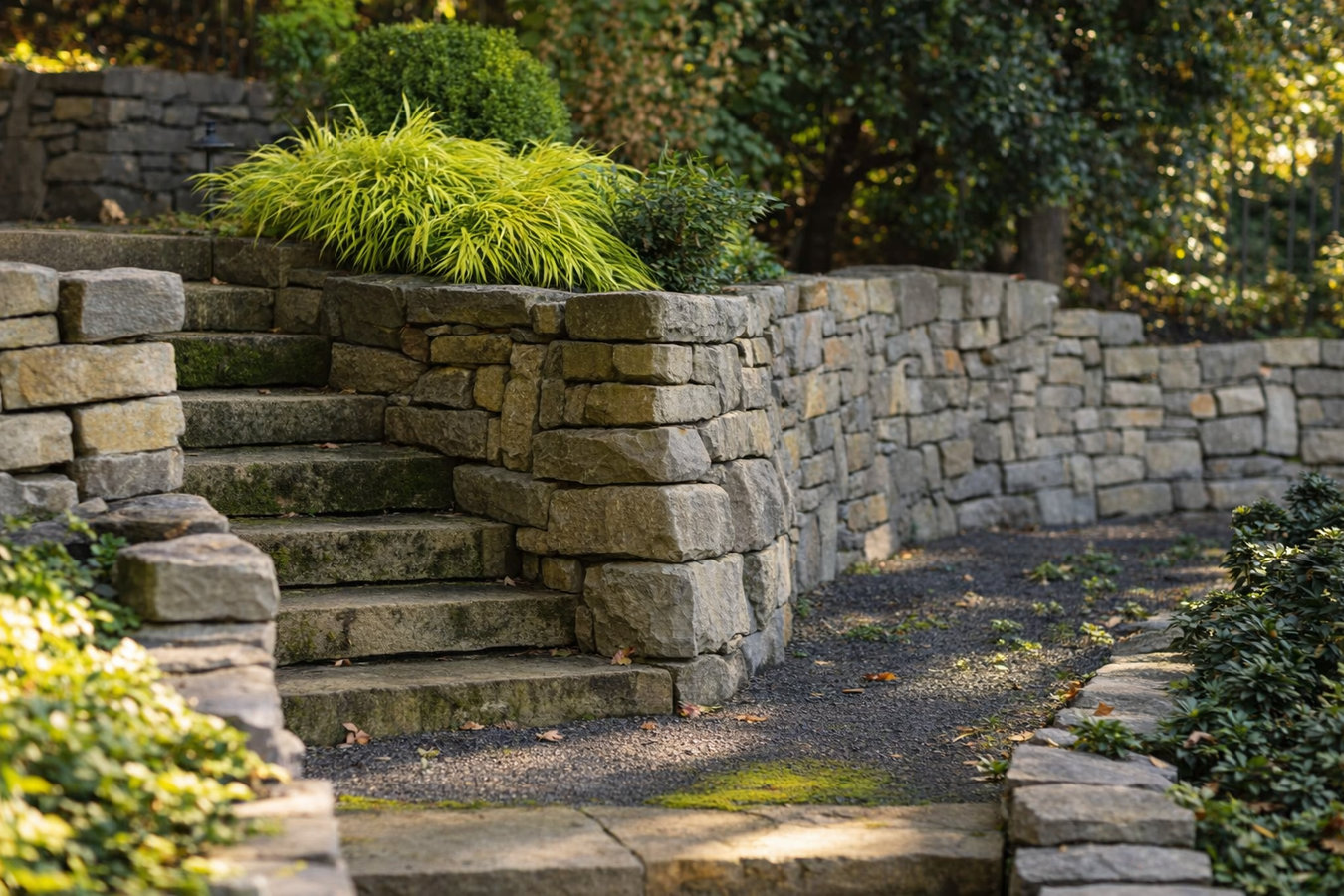
Inverness homes on larger lots near Lake Henderson, the Tsala Apopka chain, or the Withlacoochee State Trail have outdoor spaces that benefit from permanent stone structures - patios, garden walls, steps, and water feature surrounds that hold up to Citrus County's humidity, summer rain, and shifting karst soil better than wood or pavers. For older CBS ranch homes, a stone retaining wall or garden feature adds lasting character without a major renovation. Our stone masonry work in Inverness includes proper ground preparation suited to Citrus County's sandy limestone soil, Hernando County-adjacent permit knowledge, and mortar selection designed for Florida's wet climate.
The bulk of Inverness homes were built between the 1960s and 1990s using concrete block construction - which puts most of them at the age where original mortar joints have reached or passed the end of their useful life. Citrus County's wet summers and high humidity accelerate mortar breakdown, and homes near the lakes or on low-lying lots see this problem faster than properties with better drainage. Tuckpointing removes failing mortar and replaces it with a fresh mix suited to the local conditions, sealing the joints before moisture works its way deeper into the block.
Sandy, karst-based soil in Citrus County shifts and erodes during the heavy summer rains that roll through Inverness almost daily from June through September. Retaining walls on sloped lots or near water features take the brunt of that pressure, and walls built without proper drainage behind them can begin leaning or bowing within a few seasons. We build retaining walls from concrete block or natural stone with drainage planned in from the start - and we pull the Citrus County permit for any wall that meets the height threshold requiring one.
Older CBS ranch homes in Inverness often show stucco cracking, efflorescence, and water staining on exterior walls that have gone without maintenance for years. Many of these homes are owned by long-term residents who are ready to address deferred work but want a contractor who gives them a straight assessment of what actually needs attention - rather than a blanket recommendation to replace everything. Masonry restoration addresses the underlying block and mortar before refinishing the surface, producing a result that lasts longer than a fresh coat of paint.
Inverness sits on karst limestone geology - the same system that creates Florida's famous springs - which means the ground beneath older homes can shift and settle in ways that homeowners in other parts of Florida do not encounter. Cracked block foundation walls, uneven floors, and sticking doors and windows are common signs of foundation movement on Citrus County properties. Catching and repairing foundation masonry issues early is far less costly than waiting until the damage has spread through multiple walls.
Inverness is the county seat of Citrus County and sits at the edge of several lakes, including Lake Henderson at the edge of downtown and the Tsala Apopka chain to the west. The city has one of the oldest median populations in Florida, and a large share of homeowners have lived in the same house for 20 or 30 years. That means a lot of properties in the 1960s-through-1990s vintage are carrying accumulated maintenance needs - cracked mortar, stucco damage, and retaining walls that have been quietly shifting since the last wet season. Concrete block construction is the standard here, and those homes need contractors who understand how CBS walls behave in Citrus County's specific soil and moisture conditions, not contractors who learned their trade on wood-frame construction elsewhere.
Citrus County's karst limestone geology creates soil conditions that are genuinely different from the rest of the Florida Gulf Coast. The ground drains quickly in some spots, holds water in others, and can shift subtly over time in ways that crack masonry foundations, heave walkways, and undermine retaining walls that were built without drainage behind them. Summer rain from June through September is heavy and frequent - Inverness averages around 50 inches of rainfall per year - and that water has to go somewhere. Homes with poor drainage around the foundation perimeter are the ones that develop the most serious masonry problems over time, and those problems compound if they are left unaddressed through multiple rainy seasons.
We work on CBS homes throughout the Nature Coast corridor, and Inverness comes up regularly because of its concentration of older properties on larger lots near the water. For projects that require a permit, we coordinate with the Citrus County Building Division. Retaining walls above the height threshold, structural masonry, and exterior cladding changes all go through Citrus County's permit process - and we handle that paperwork on your behalf so you do not have to track it yourself.
Inverness is laid out along US-41 running north-south and State Road 44 running east-west, with most of the older residential neighborhoods clustered around downtown and Lake Henderson. The Withlacoochee State Trail runs directly through town, and many homes near the trail corridor have backyard lots that slope toward the low-lying trail bed - exactly the kind of drainage situation that puts pressure on retaining walls and foundation perimeters over time. We also serve Dade City to the south and Brooksville to the southeast - neighboring communities with similar karst soil conditions and older CBS housing stock.
Call or submit our contact form and we will respond within 1 business day to schedule a site visit. A photo or rough description of the problem helps, but we gather everything needed when we visit your Inverness property in person.
We walk your property, assess the masonry condition, and check the soil and drainage situation around the work area - which matters more in Inverness than in many other markets. You receive a written estimate with materials and labor listed separately and no surprise line items added later.
For projects that require a Citrus County permit, we submit the application on your behalf. Permit review typically adds one to two weeks before work can begin. We give you a firm start date once the permit is in hand - or confirm that your project does not require one.
The crew completes the job, cleans the site, and walks the finished work with you before leaving. We explain curing timelines and any follow-up care recommendations specific to your project - and leave you with any permit documentation you need for your home file.
We serve all of Inverness and the surrounding Citrus County area. Call or send a message and we will respond within 1 business day.
(352) 651-0127Inverness is the county seat of Citrus County, situated in Florida's Nature Coast region about 60 miles north of Tampa. With a city population of around 7,000 and a much larger surrounding unincorporated area, Inverness is best known for its lakes and outdoor lifestyle. Lake Henderson sits at the edge of downtown, and the Tsala Apopka chain of lakes extends to the west. The Crown Hotel, a historic downtown landmark dating to the late 1800s, anchors the city's small but active commercial core. The Withlacoochee State Trail - one of the longest paved rail-trails in Florida at 46 miles - runs directly through Inverness and connects the city to communities throughout the Nature Coast corridor.
The housing stock in Inverness is predominantly single-story concrete block ranch homes built between the 1960s and 1990s on lots that are generally larger than in more densely developed parts of Pinellas or Hillsborough County. Many properties sit near the water - on Lake Henderson, the Tsala Apopka chain, or canals that connect to the broader lake system - and waterfront structures like docks, seawalls, and screened enclosures are common. Citrus County also has a notably high share of manufactured and mobile homes compared to the Florida average, particularly in age-restricted communities in the unincorporated areas surrounding Inverness. Neighboring Brooksville to the south and Dade City to the southeast share similar building stock and soil conditions, making the Nature Coast corridor a natural service territory for masonry work.
Professional foundation crack and settlement repair to protect your home's structural integrity.
Learn moreExpert chimney tuckpointing, crown repair, and waterproofing for safe, lasting performance.
Learn morePrecision mortar joint removal and replacement to restore brick and stone masonry.
Learn moreSpalled, cracked, or damaged brick replaced and matched for a seamless finish.
Learn moreCustom paver driveways designed for curb appeal, durability, and easy maintenance.
Learn moreEngineered retaining walls that hold soil, prevent erosion, and enhance landscapes.
Learn moreHistoric and aging masonry brought back to life with careful restoration techniques.
Learn moreNew outdoor and indoor fireplaces built to code with quality brick and stone.
Learn moreNatural and manufactured stone veneer applied to walls, pillars, and facades.
Learn moreDurable concrete block walls for residential, commercial, and agricultural applications.
Learn moreNew foundation block wall construction built to last for decades.
Learn moreCustom outdoor kitchens crafted from brick, block, and stone for year-round enjoyment.
Learn moreNew brick walls installed for privacy, security, and lasting curb appeal.
Learn moreSkilled natural stone work for walls, steps, columns, and decorative features.
Learn moreCall us today for a free on-site estimate in Inverness. Citrus County's sandy soil and summer rains are hardest on masonry that has been left waiting - the sooner it is addressed, the less it costs to fix.