
Loading...
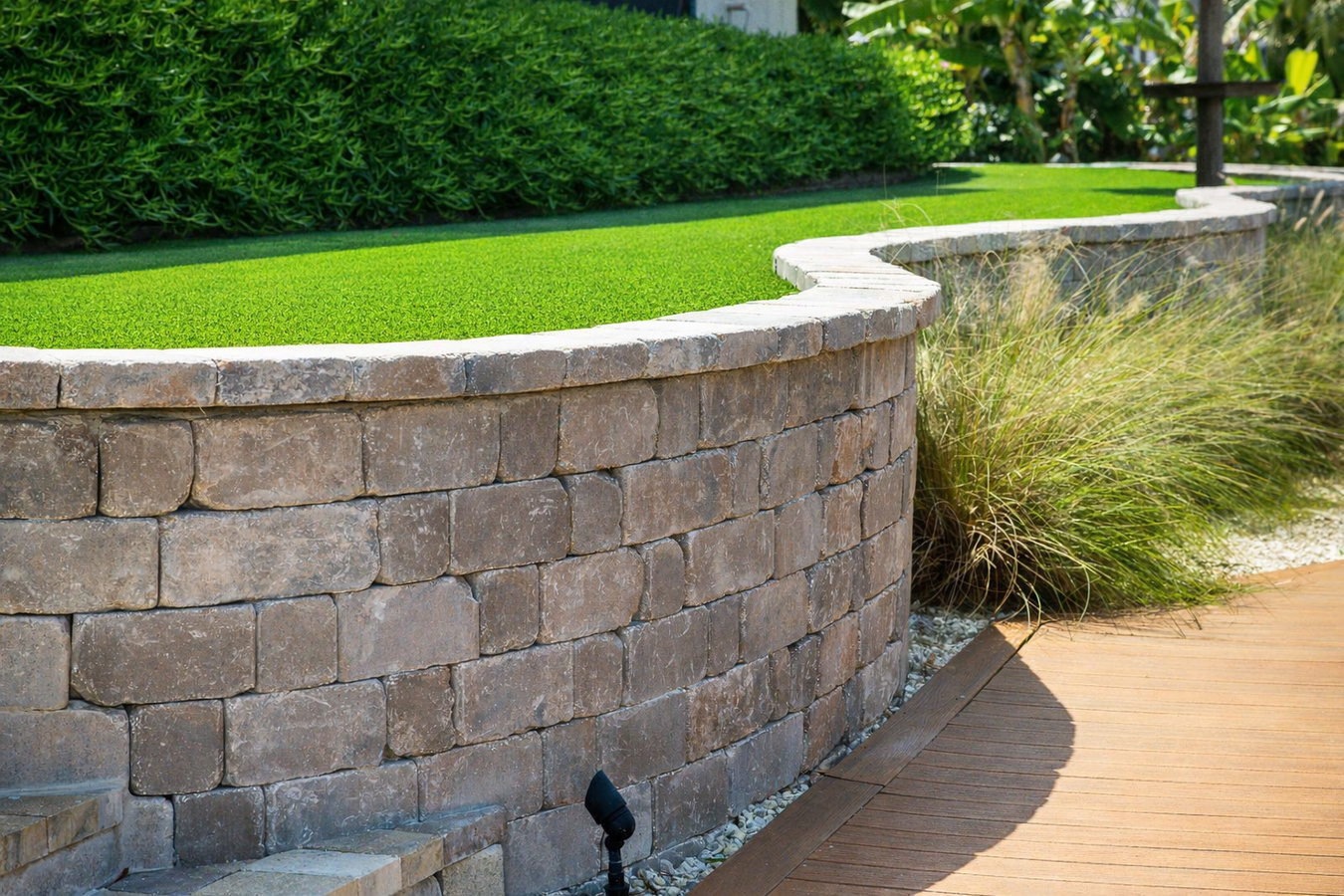
Spring Hill's sandy soil and heavy summer rains wash slopes away year after year. A properly built retaining wall with drainage behind it stops that erosion permanently and can turn an unusable slope into level, workable yard space.
Retaining wall construction in Spring Hill holds back soil on slopes and grade changes to stop erosion, redirect water, and create usable flat yard space - most residential walls take one to three construction days once the base is prepared. Spring Hill's combination of sandy loose soil and concentrated summer rainfall makes slopes particularly vulnerable. Soil and mulch that wash away every June and September represent an ongoing maintenance cost that a well-built wall eliminates permanently. We also offer concrete block wall construction for homeowners who need both a retaining structure and a freestanding boundary wall as part of the same project.
Many Spring Hill homes built in the 1980s and 1990s have original retaining walls that are now at or past their useful life. A leaning or cracking wall does not stay in place - it falls, and what is in front of it goes with it.
If you notice bare patches appearing on a slope after a heavy storm, or mulch and soil washing onto your driveway or sidewalk, the ground is eroding. Spring Hill's summer rainy season accelerates this problem quickly. A retaining wall stops that erosion by holding the soil in place permanently.
A wall tilting away from the hillside or showing horizontal cracks across the face is telling you the pressure behind it has become too much. This is especially common in Spring Hill homes from the 1980s and 1990s where original walls are now aging out. A leaning wall can collapse suddenly - do not wait.
If water consistently collects at the bottom of a grade change after rain, it means water is running down with nowhere to go. Over time that pooling saturates the soil and can undermine your foundation, driveway, or lawn. A retaining wall with proper drainage redirects that water safely away from your home.
If part of your yard is too steep to maintain safely or too awkward to use, a retaining wall can turn that space into a flat, functional area. Many Spring Hill homeowners use the opportunity to create a level garden bed, patio, or play area they could not have on the slope.
We build retaining walls in concrete block, natural stone, and poured concrete. Concrete block - also called segmental retaining wall block - is the most common choice in Spring Hill because it is strong, cost-effective, and widely available in styles that suit Florida home exteriors. Natural stone walls cost more but add a look and texture that manufactured block cannot replicate, and they work particularly well as garden terracing in larger yards. Poured concrete is the choice when maximum strength is the priority - typically for taller walls or when an engineer's review is required. Every wall we build includes gravel backfill and a drainage pipe behind it. Drainage is not an add-on here - it is how every wall is built.
For projects that also involve broader hardscape work, our masonry restoration service can bring aging walls or structures back to working condition without full replacement. And if your project includes large flat areas that need structural separation from grade changes, our concrete block walls service covers freestanding and boundary wall applications on the same property.
Best for most Spring Hill homeowners - strong, cost-effective, and available in styles that complement Florida home exteriors.
Suits homeowners who want a high-end finish with texture and character for garden terracing or decorative grade changes.
Ideal for taller walls or situations where maximum structural strength is required, including engineer-reviewed designs.
Recommended for steep slopes where a single tall wall is not the right solution - stepped terracing distributes pressure and creates usable level areas.
Spring Hill receives roughly 54 inches of rain per year, and most of it arrives in intense afternoon storms between June and September. Sandy soil that absorbs water quickly also loses structure quickly - and the pressure that builds up behind a wall during a heavy storm is the single most common cause of wall failure. Hernando County building permits for walls above a certain height exist specifically to ensure drainage is designed into the project from the start. Many homes built in the area during the 1980s and 1990s have original retaining walls that were built without adequate drainage behind them - those walls have been under water pressure for two to three decades, and replacement is often the only real option.
We build retaining walls across the area, including projects in Brooksville and Land O Lakes. Knowing Hernando County's permit process and the HOA requirements common in Spring Hill's planned communities means your project moves forward without surprises.
We respond within 1 business day and schedule a free site visit. A retaining wall estimate done over the phone without seeing the slope, soil, and drainage is not worth much - we come to you before giving any numbers.
After the visit you receive a written estimate covering materials, labor, drainage work, and any permit fees. If Hernando County requires a permit for your wall, that is handled by us - including filing, scheduling, and the county inspection.
The crew digs out the base area and compacts a solid, level foundation. In Spring Hill's sandy soil this step takes extra care. This is the most disruptive part of the job - expect equipment in your yard for at least part of the day.
The wall goes up course by course with gravel and drain pipe placed behind each layer as it rises. Once complete, the crew cleans up and walks the finished wall with you. If a county inspection is required, your contractor coordinates that - you do not contact the county.
We respond within 1 business day. No obligation - just a free on-site visit and a written quote that covers everything. Submit the form and we will call to schedule your estimate.
(352) 651-0127Our contractor license is verifiable through the Florida Department of Business and Professional Regulation. Full liability insurance is carried on every job, and you can check our license status before signing anything. A licensed contractor in Florida has met the state's training and insurance requirements - and has something real to lose if the work is not done right.
We work in this area every week and understand Spring Hill's sandy soil, its seasonal rainfall patterns, and the specific neighborhoods - including Timber Pines and older planned communities - where HOA approval is required before work can begin. Local knowledge speeds up the permit process and prevents the surprises that catch out-of-area contractors off guard.
Every retaining wall we build includes gravel backfill and a drain pipe behind the wall face. In Hernando County's rainy climate, drainage is not an upgrade - it is a requirement. We never propose a wall without a drainage plan, and we explain that plan clearly during the estimate visit so you know exactly what is being built behind the wall.
Retaining walls above the county's height threshold require a permit and a county inspection to close the job out. We handle filing the permit, scheduling the inspection, and following up with the building department so you never have to contact the county yourself. A closed permit is also an asset when you sell the home - buyers and lenders can verify the work was done to code.
A retaining wall is one of the few home improvements that protects your property value while solving a practical problem - and one where skipping drainage or permits costs far more to fix later than it saves up front. Contact us to schedule your free on-site estimate.
For retaining wall design standards, visit the National Concrete Masonry Association (NCMA). Before excavation begins on any project, Florida law requires underground utility lines to be marked - your contractor should call Florida 811 before breaking ground.
Older retaining walls that still have structural integrity can often be restored with fresh mortar and surface repair rather than full replacement.
Learn more about Masonry RestorationConcrete block is the most common retaining wall material in Spring Hill - learn more about our block wall construction services for both retaining and freestanding applications.
Learn more about Concrete Block WallsSpring Hill's summer rains do not wait - schedule your wall now and have drainage in place before the next wet season puts more pressure on your slope.